Platform versus new development
Clarify whether the project uses an existing model, modifies available parts or needs new tooling and engineering work.
Model platform, components, color, electrical version, packaging, tooling and production setup can each create a different minimum.
SMALL APPLIANCE MOQ PLANNING
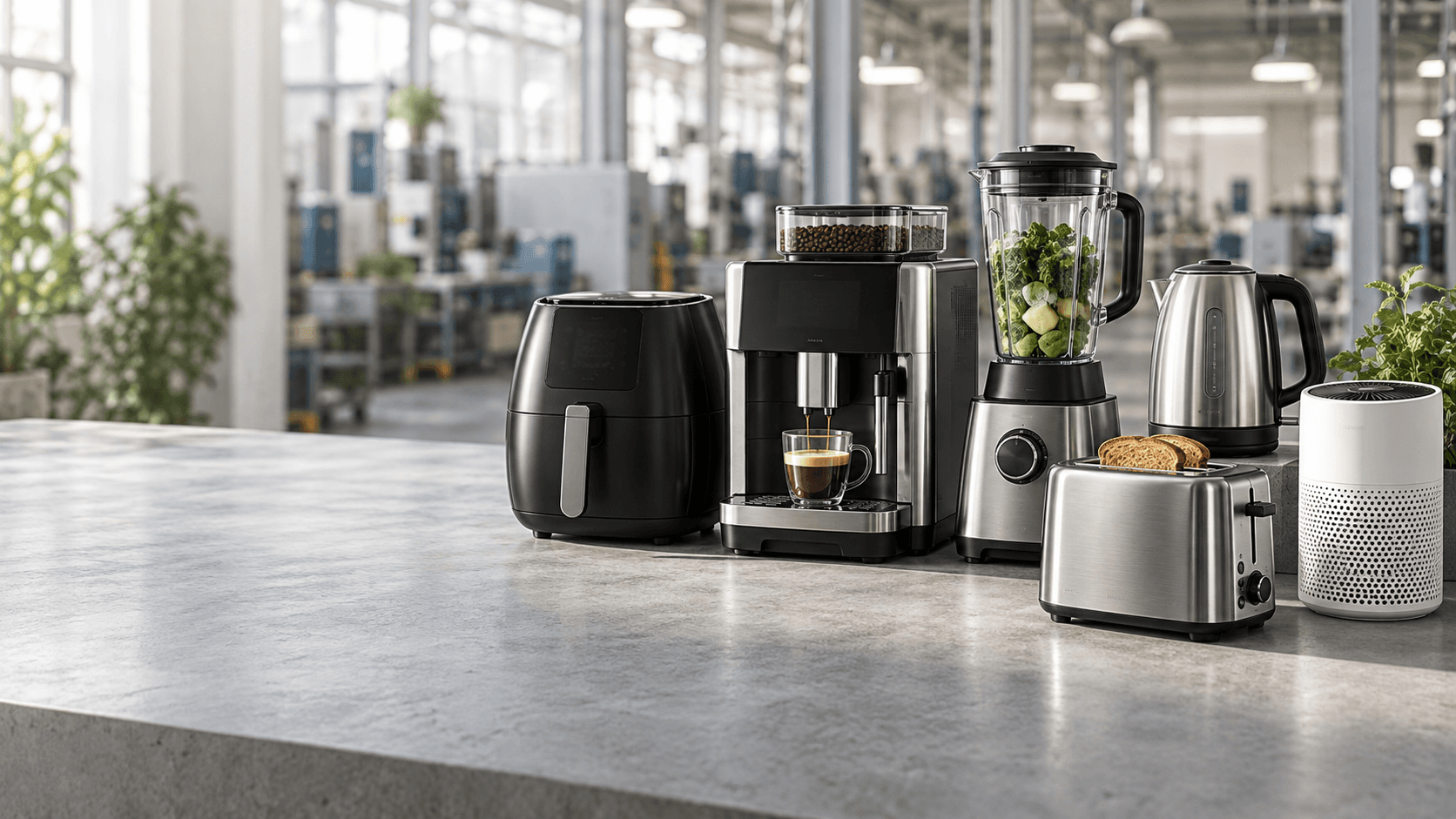
Small-appliance MOQ is not one universal factory number. It can be influenced by the selected platform, component purchasing, color or material batches, voltage and plug variants, printed packaging, tooling, production setup and inspection cost. Buyers should ask which element creates each minimum and compare the total launch commitment, not only units per model.
CAPABILITY
A useful MOQ discussion identifies what is driving the quantity and which customization choices can be simplified without undermining the product brief.
Clarify whether the project uses an existing model, modifies available parts or needs new tooling and engineering work.
Map colors, voltage, plugs, language packs, cartons, manuals and accessories because each split can create its own constraint.
Compare inventory exposure, tooling, samples, testing, packaging stock, spare parts and follow-up order practicality together.
PRODUCT & PROJECT SCOPE
Tooling, custom components, printed packaging and fragmented variants may sit outside the headline MOQ. Request a line-item view of one-time and recurring commitments before choosing a route.
PROJECT WORKFLOW
Each stage closes specific decisions so the next stage begins with a clearer reference.
Choose the closest feasible platform and separate mandatory changes from optional differentiation.
List color, voltage, plug, language, carton, accessory and label combinations as distinct controlled SKUs.
Ask which component, process, print run, tooling item or supplier condition creates the quoted quantity.
Review total cash commitment, inventory mix, approval work and reorder practicality for each proposed configuration.
Send the product, market, required changes, variant plan and estimated quantity. We will organize the assumptions that need confirmation.
BUYER CHECKPOINTS
When the reason is visible, buyers can evaluate whether to combine variants, use standard packaging, adjust customization or keep the original differentiation.
PROCUREMENT FAQ
Answers remain project-specific and avoid promises that should only be made after requirements are reviewed.
Different models use different components, finishes, production setups, supplier minimums, packaging and tooling. The exact driver should be identified for the selected configuration.
Sometimes, but not automatically. Color batches, material purchasing, changeover, artwork and carton requirements can create separate minimums or added cost.
Using available neutral or standard packaging may reduce a printed-material constraint, but it does not remove product, component or production minimums.
Compare specification, one-time costs, unit cost, quality controls, inventory mix, reorder conditions and landed cost. The lowest stated MOQ may not be the lowest-risk launch.
SEND YOUR REQUIREMENTS
Include the product, destination market, functions, branding needs, estimated quantity and timing. We will use the details to prepare the next discussion.
info@EleTavo.com